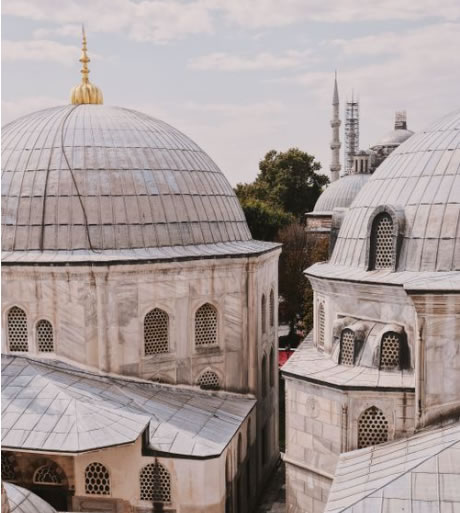
Sultanahmet is the epicentre of world history. Enclosed within the ancient Theodosian maritime walls on Istanbul’s historic peninsula, this single square mile was the beating heart of three colossal empires: the Roman, the Byzantine, and the Ottoman. Standing in the central square, you can hear the resonant calls to prayer bouncing between the six minarets of the Blue Mosque and the pink-hued monumental domes of Hagia Sophia.
Whether you have three days or three weeks in Istanbul, Sultanahmet is where your journey begins. Here is your definitive neighborhood guide on what to see, where to eat, how to bypass the massive tourist queues, and how to discover the quiet, atmospheric backstreets behind the monuments.
Top Historic Landmarks in Sultanahmet
1. Hagia Sophia (Ayasofya-i Kebir Cami-i Şerifi)
Commissioned by Byzantine Emperor Justinian I and consecrated in 537 AD, Hagia Sophia remained the largest cathedral in the world for nearly a thousand years. Its floating central dome, supported by revolutionary pendentives and adorned with golden seraphim angels, continues to defy architectural comprehension. Converted into an imperial mosque by Sultan Mehmed II following the Ottoman conquest in 1453, a secular museum in 1934, and reinstated as an active mosque in 2020, it is a testament to the endurance of Istanbul.
2026 Visiting Guide:
Foreign tourist visitors enter via the separate visitor entrance on the southern gallery side (entry ticket required for the upper gallery museum area, where the world-famous Byzantine golden mosaics—including the Deësis and Empress Zoe—can be admired in intimate detail). Modest dress is mandatory (headscarves for women, knees and shoulders covered for everyone). The best time to visit is early morning (09:00 - 10:00 AM) or during evening hours after the final daily prayer when the golden interior chandeliers illuminate the marble arches.
2. The Blue Mosque (Sultanahmet Camii)
Directly facing Hagia Sophia across a manicured public garden with dancing fountains stands the Blue Mosque, constructed between 1609 and 1616 during the rule of Sultan Ahmed I. Architect Sedefkâr Mehmed Ağa, a pupil of the legendary Mimar Sinan, designed the sanctuary with six soaring minarets and an interior lined with more than 20,000 handmade Iznik ceramic tiles depicting lilies, carnations, and cypress trees.
- Admission: Free (it is an active house of worship).
- Etiquette: Closed to non-worshippers during the five daily prayer times (each lasting approx. 45 minutes) and Friday congregational midday prayer. Shoe bags are provided at the entrance.
3. The Basilica Cistern (Yerebatan Sarnıcı)
Descend a staircase into a subterranean cathedral carved out in the 6th century to store drinking water for the Great Palace of Constantinople. Supported by a forest of 336 marble columns salvaged from classical pagan temples, the cistern features the famous upside-down and sideways Medusa heads used as column plinths. Recent restoration added gentle LED light displays and contemporary bronze sculptures that cast surreal reflections onto the calm water.
4. Topkapi Palace (Topkapı Sarayı)
For nearly four centuries, Topkapi Palace was the administrative center and primary residence of the Ottoman Sultans. Spread across four sprawling courtyards overlooking the convergence of the Bosphorus, the Golden Horn, and the Marmara Sea, highlights include:
- The Imperial Harem: An opulent labyrinth of over 400 private rooms adorned with mother-of-pearl inlay, tiled baths, and gilded ceilings.
- The Imperial Treasury: Housing the 86-carat Spoonmaker's Diamond (the fourth largest diamond in the world) and the emerald-encrusted Topkapi Dagger.
- The Sacred Relics: Preserving historical artifacts dating back to early Islamic history.
Authentic Food & Cafes in Sultanahmet
While the main boulevard (Divan Yolu) has many tourist-oriented establishments, Sultanahmet boasts some of the city's most legendary heritage eateries if you know where to turn:
- Tarihi Sultanahmet Köftecisi Selim Usta: Operating at Divan Yolu No. 12 since 1920. Order the classic grilled lamb/beef meatballs (köfte), accompanied by white bean salad (piyaz) and spicy red pepper paste. Avoid the copycat restaurants next door with similar names.
- Matbah Ottoman Palace Cuisine: Located next to the Caferağa Medresseh. Specializes in recipes recreated from authentic 15th-century imperial palace archives, such as lamb shank braised with dried apricots and almond soup.
- Derviş Cafe & Garden: A quiet garden courtyard tucked behind the Blue Mosque bazaar, perfect for sipping Turkish tea or freshly squeezed pomegranate juice while listening to soothing sufi music.
How to Get to Sultanahmet
| From | Transit Line | Estimated Time |
|---|---|---|
| Taksim / Beyoğlu | Funicular F1 down to Kabataş, then Tram T1 to Sultanahmet | 20 – 25 mins |
| Karaköy | Tram T1 southbound across Galata Bridge to Sultanahmet | 12 mins |
| Kadıköy (Asian Side) | Ferry to Eminönü, then Tram T1 (3 stops) or walk 15 mins uphill | 35 mins |
Sultanahmet Pro-Tips
- Wander down into Cankurtaran & Akbıyık: Descend the cobblestone slope behind Hagia Sophia towards the ancient sea walls. Here you will find quiet wooden Ottoman houses, boutique guesthouses, and sleepy street cats away from the crowds.
- Gülhane Park Stroll: When the heat of the stone plazas tires you, take refuge under the centuries-old plane trees of Gülhane Park, the former outer gardens of Topkapi Palace.
- Beware the "Helpful Friend" Scam: If an English-speaking local approaches you near the Hippodrome asking where you are from and offering to take you to their uncle’s carpet shop or tea house, politely decline and continue walking.